Collaborative Learning & Discussion Agents
Learning with others means comparing ideas, explaining what we know, and sometimes taking turns as the teacher. These systems support that exchange.
14 publications
Explore topic →I design emotionally intelligent agents and learning technologies that help people learn, express themselves, and connect.
Currently Visiting Scholar at TIDE, UPF Barcelona, Spain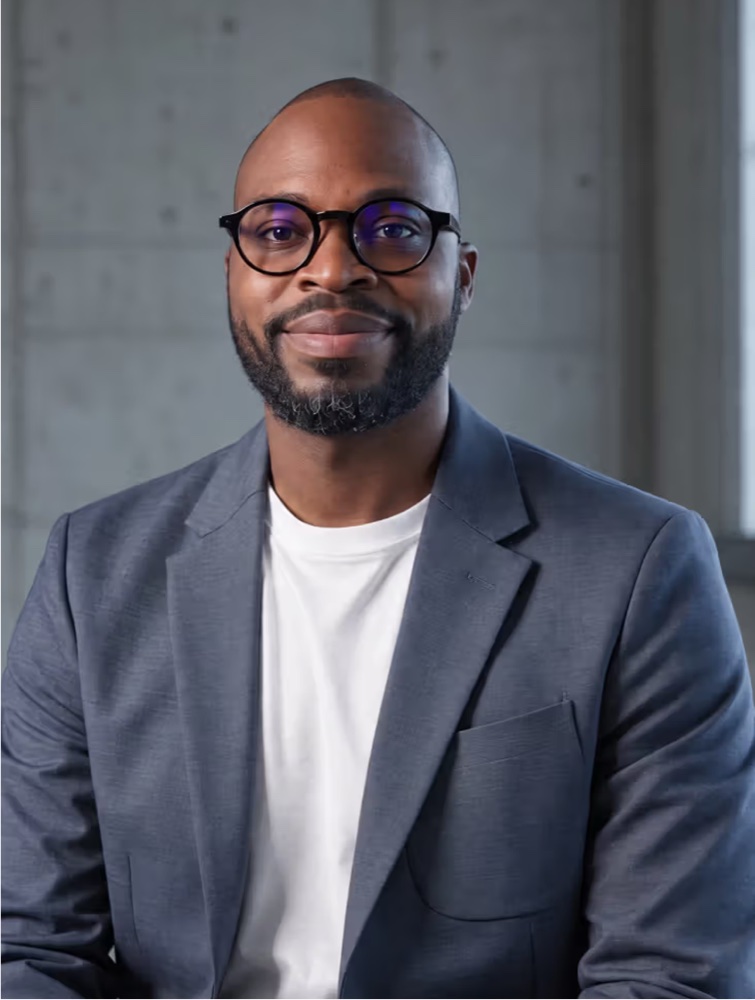


Ọ̀rọ̀ ni a fi ń mọ ènìyàn. · 言葉は心の使い。
It is through words that we know a person. / Words are the messenger of the heart.
Six threads, one question: how do we build machines that help people find their voice?
Learning with others means comparing ideas, explaining what we know, and sometimes taking turns as the teacher. These systems support that exchange.
A learner hesitates, afraid to slip, and the agent notices, softening how it speaks so they keep going.
Designing for how people feel, perceive, and choose, from personalized content to sensory feedback that makes exercise more engaging.
A robot among people has to read the room. This work teaches the unspoken social rules, so its presence feels considerate.
Tools that help teachers create learning material and help learners explore, plan, and practice, from dialogue scenarios to personalized learning paths.
How can a system recognize, express, and respond to emotion? This work studies the signals it uses and the social effects of its response.
A selection of work on dialogue, collaborative learning, and personalized experiences.
International Journal of Artificial Intelligence in Education, Vol. 29, 2019
This foundational work presents a pioneering approach to addressing affective variables in L2 learning, demonstrating how combining communicative strategies with affective backchannels effectively boosts learners' willingness to communicate.
Read the paperRecent activities, awards, and academic milestones
October 2026
My paper "From Wizard-of-Oz to Autonomous: A Hybrid Rule and LLM Backchannel Architecture for a Silent Listening Agent" received the Reproducibility Award at the GENEA Workshop (Generation and Evaluation of Non-verbal Behaviour for Embodied Agents), held on October 5 at ACM ICMI 2026 in Naples, Italy. The award goes to work that others can rebuild and verify, and the paper comes with its full source code, raw per-session event logs and a demo video. Thank you to Taras Kucherenko and the GENEA organisers for championing open, reproducible research!
October 2026
Attending the 28th ACM International Conference on Multimodal Interaction, October 5-9, to present current work on autonomous non-verbal behaviour for embodied listening agents.
August 2026
Spent August in Benin advancing joint work with researchers there, including time on the Abomey-Calavi University campus. I also met a group of Japanese students working alongside Beninese students, mixed into teams, building something together across the language barrier. A reminder that autonomy is less a matter of culture than of whether the environment invites it.
I'm Emmanuel. I study how people and AI understand one another.
I’m an Associate Professor of Human–Computer Interaction at Kansai University in Osaka. I earned my Ph.D. in Informatics at Osaka Prefecture University in 2020 as a JSPS DC1 Fellow.
Born in Benin, now at home in Japan. Two cultures I carry into the work.
Adire and shibori are two indigo-dyeing crafts, one Yoruba and one Japanese, that reached the same deep blue an ocean apart. My research looks for that same meeting point between people and the machines learning to understand them.
That meeting point is also a way to think about human–AI interaction. People bring different experiences, expectations, and ways of expressing themselves to a conversation. I want to build systems that make room for those differences: agents that respond to hesitation and emotion, and learning tools that adapt to the person using them. The shared thread is understanding how to connect without asking everyone to communicate in the same way.
Explore the research behind this ideaA cross-cultural journey that shapes my research
For most of its history, technology asked people to adapt to it.
I'm interested in the opposite: machines that adapt to us. They sense how we feel, how we struggle, how we grow, and become partners in the deeply human work of learning, expressing, and connecting.
Not artificial intelligence. Attuned intelligence.Whether you're a researcher, a student, or someone building toward the same future, I'd be glad to hear what you're working on.